If you've ever ripped a live set, a mixtape or a whole album into one giant MP3, you know the problem. You want it as separate songs with the right titles and cover art, and every option is either a desktop app, an ffmpeg command you'll never remember, or a "free" website that quietly strips the metadata.
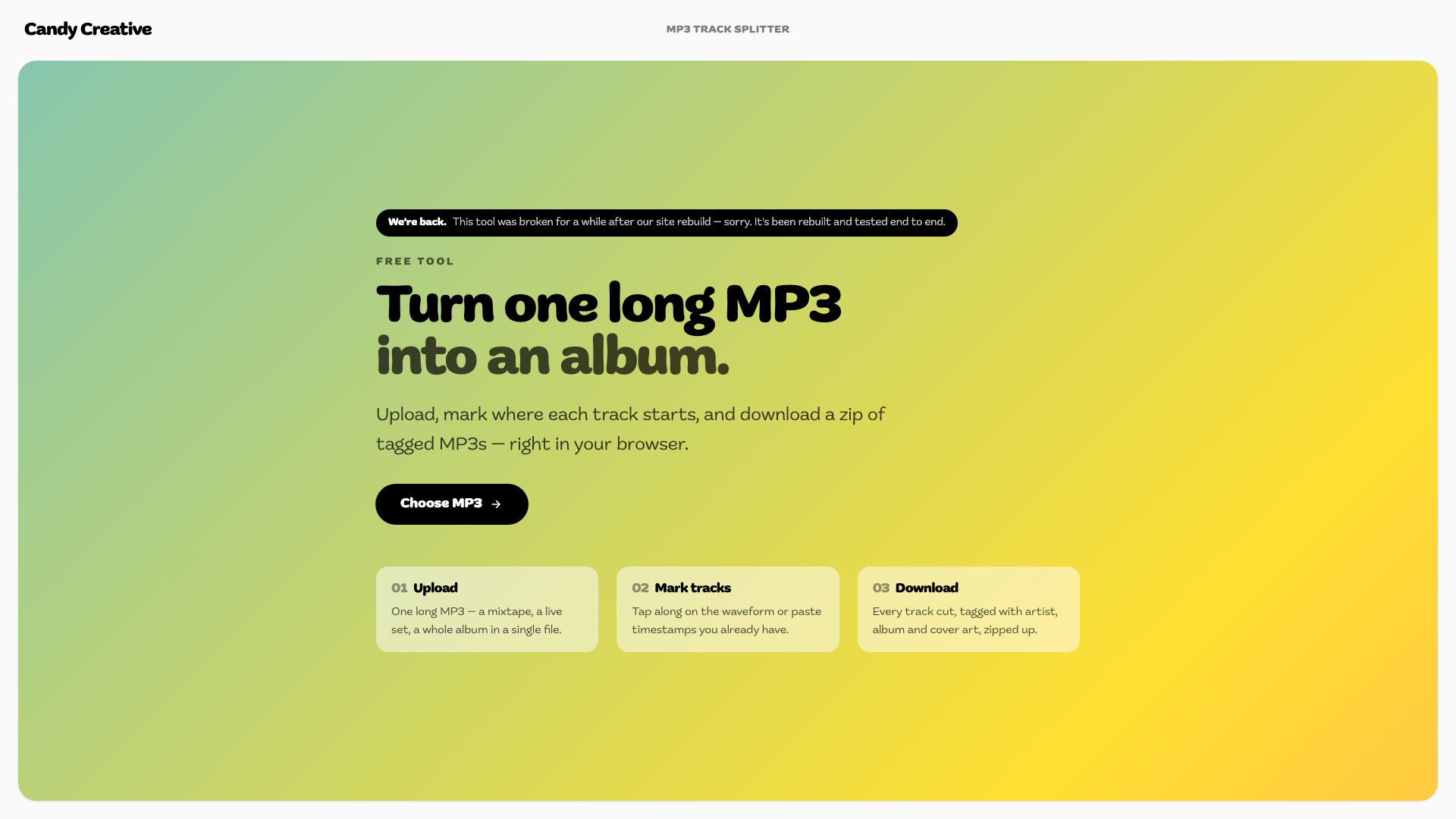
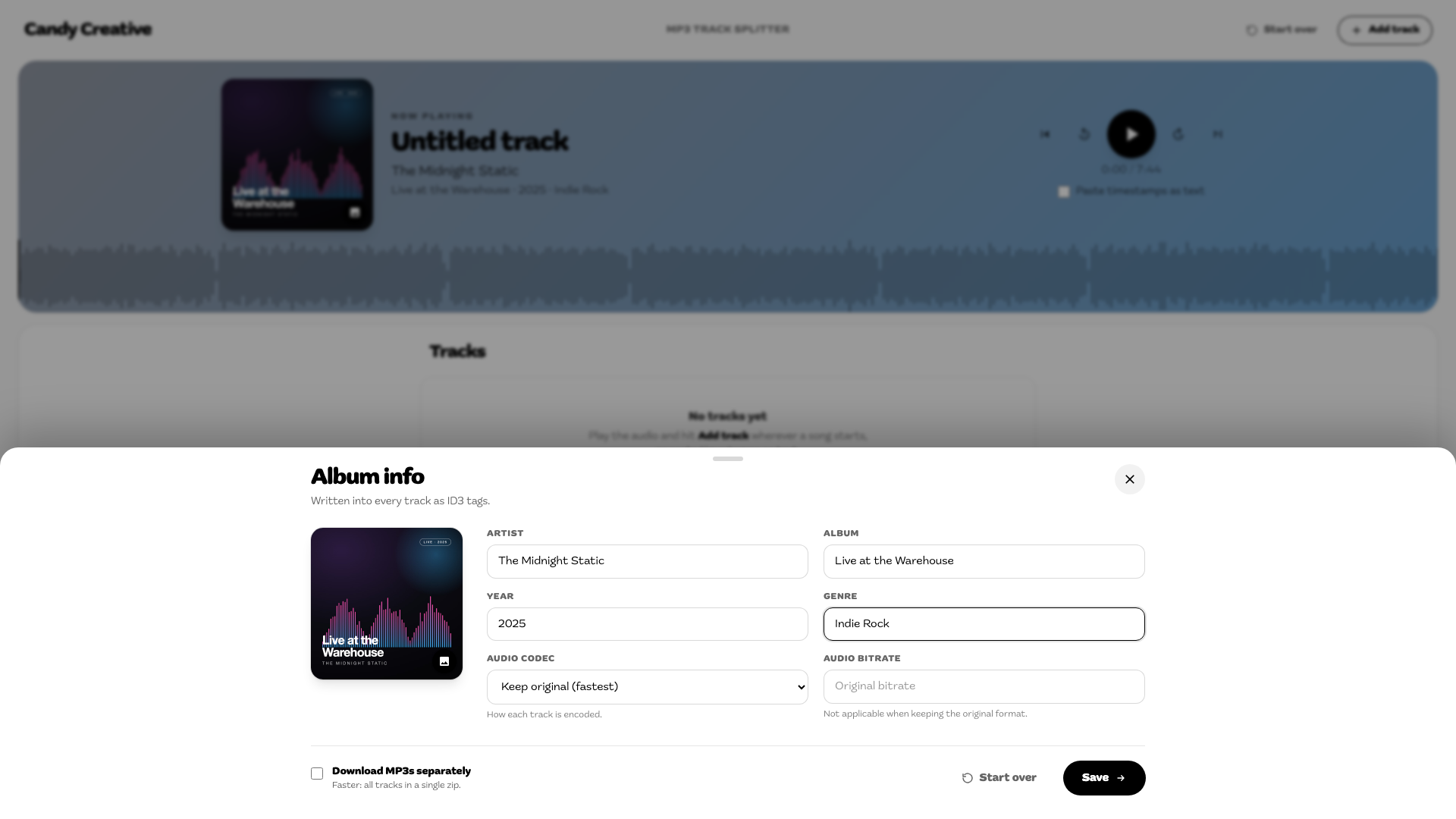
So we built one we'd actually use. Upload a long MP3, mark where each song starts, and download a zip of individual tracks with the artist, album, year, genre and artwork already written in. No account, no watermark, no catch. Try the MP3 Track Splitter and split something right now.
But honestly, the tool is only half the story. The other half is how it got built.
Candy Creative is an AI development shop. When we tell a client we can ship a real product with AI agents doing the heavy lifting, they usually want to see it, not just hear it. This splitter is that proof. A developer on our team set the direction and made the calls; AI agents wrote most of the code, the tests and, yes, even the screenshots on this page. That's not a gimmick. It's the same process we now run on client work, and it shows in a few places:
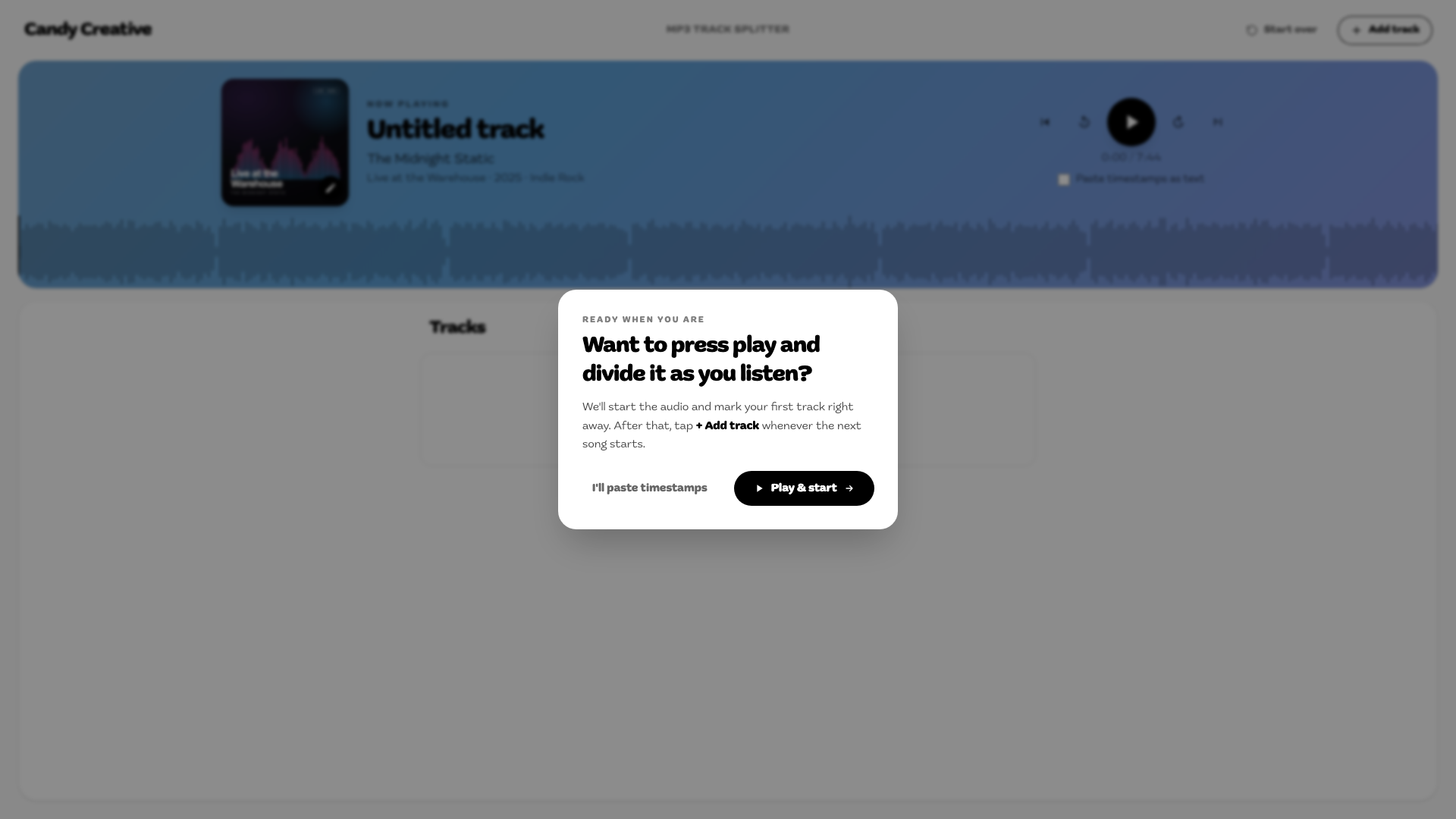
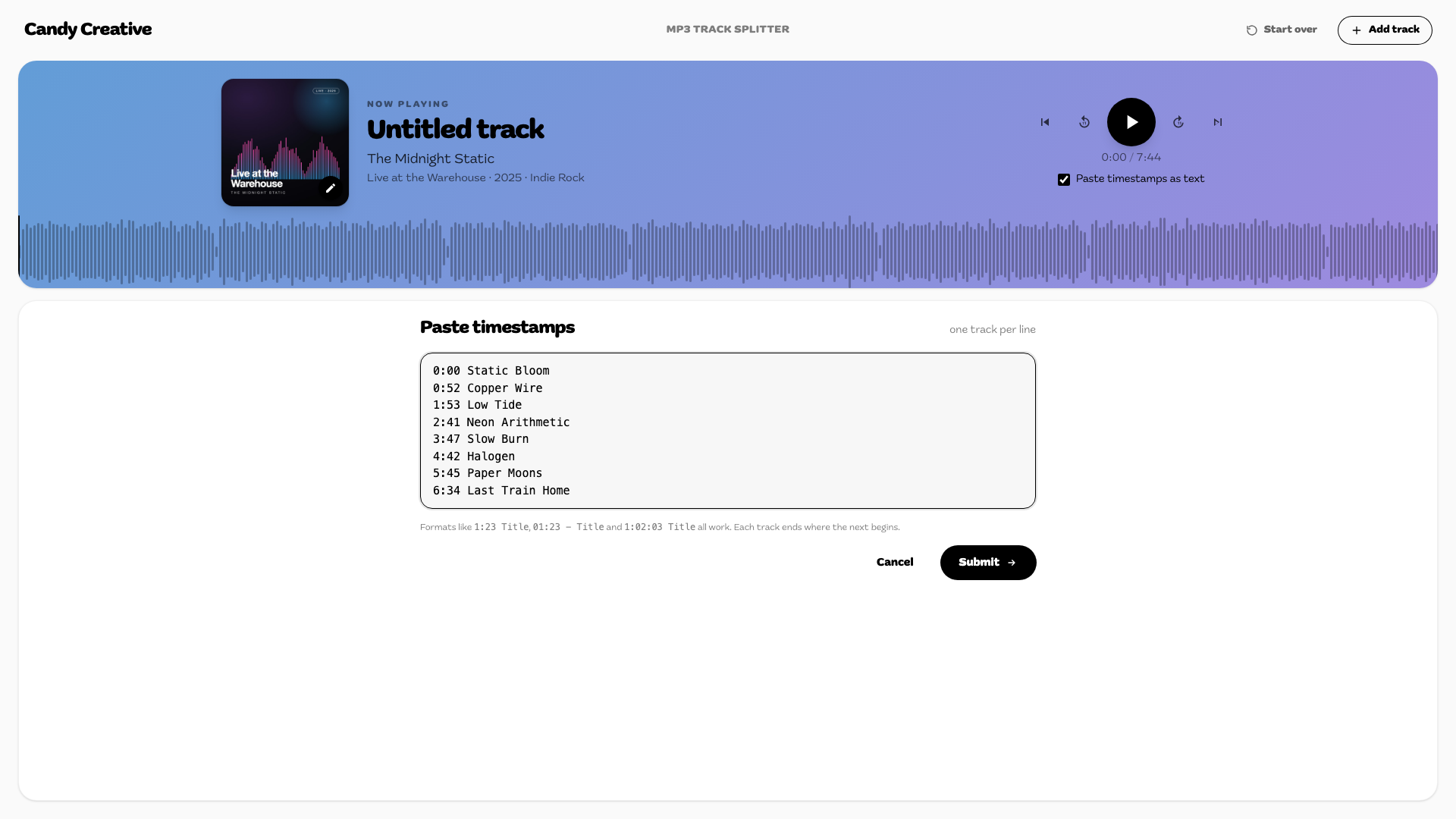
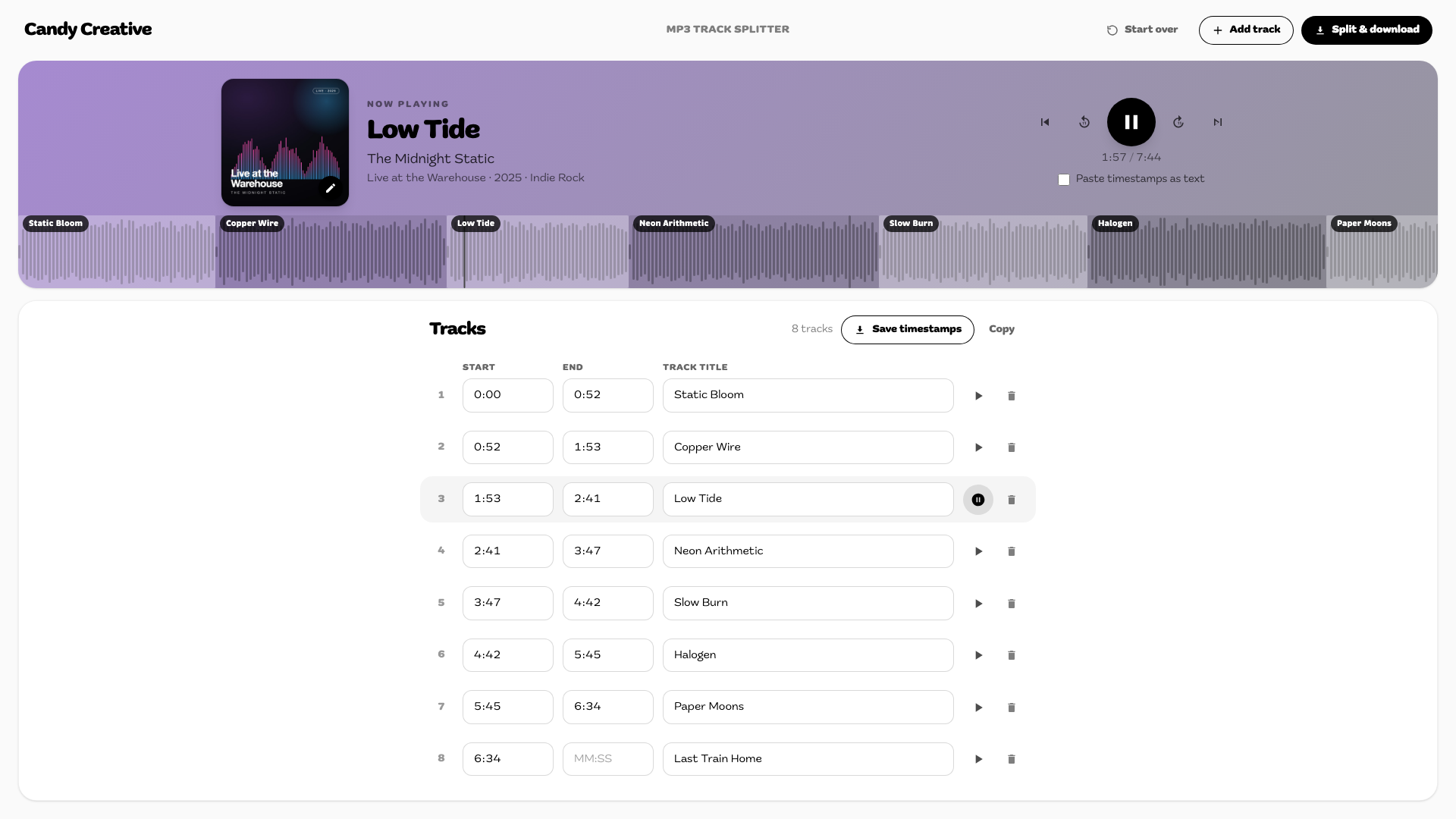
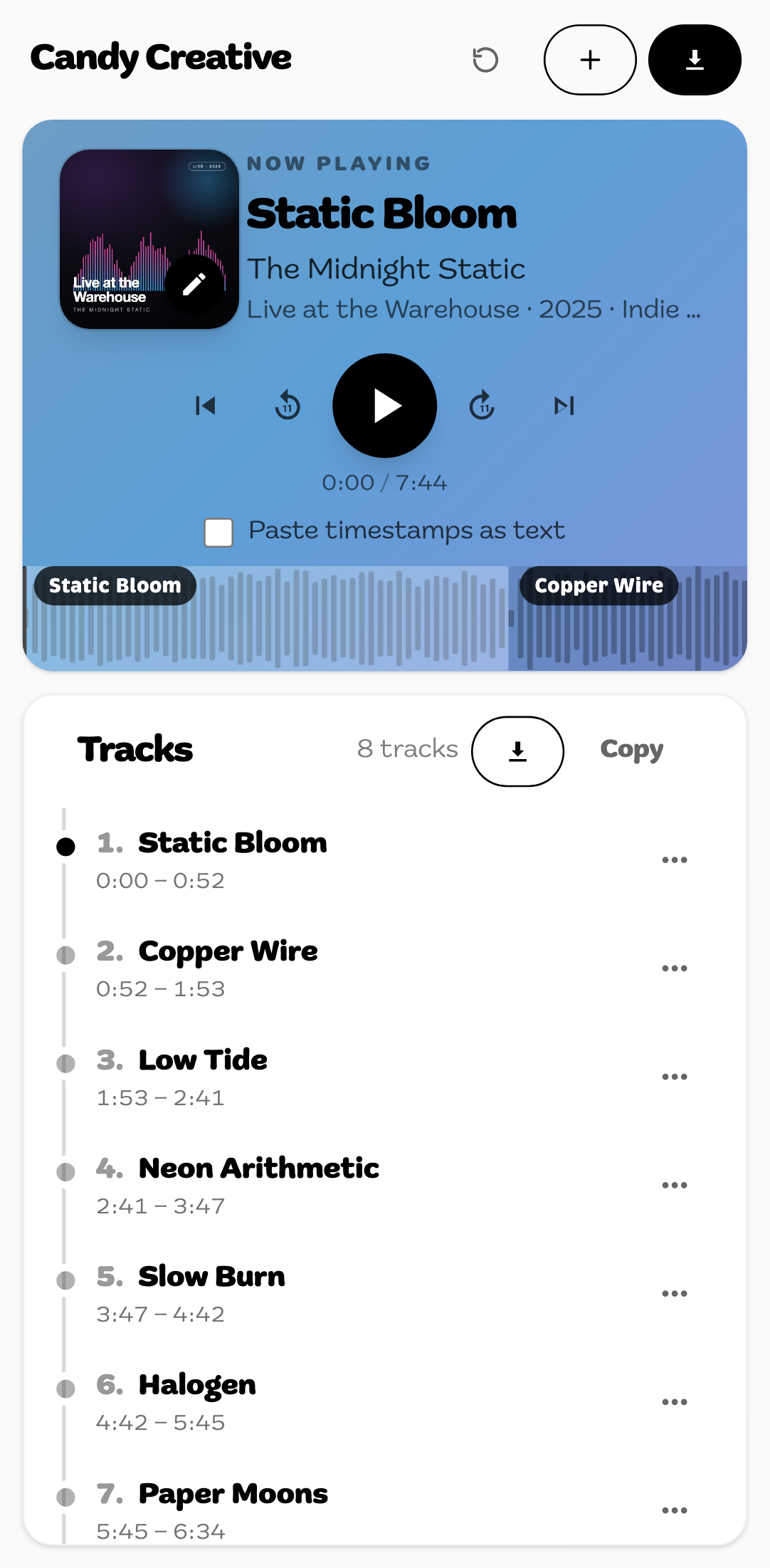
It's fast, but it's not sloppy. The audio is drawn as an interactive waveform. Each track is a coloured region you can actually see, the player picks up the colours of your cover art, and if you already have a tracklist from YouTube or Bandcamp you can paste it in as text. Small touches like that are where AI-assisted builds usually fall down. Here they didn't, because someone was still steering.
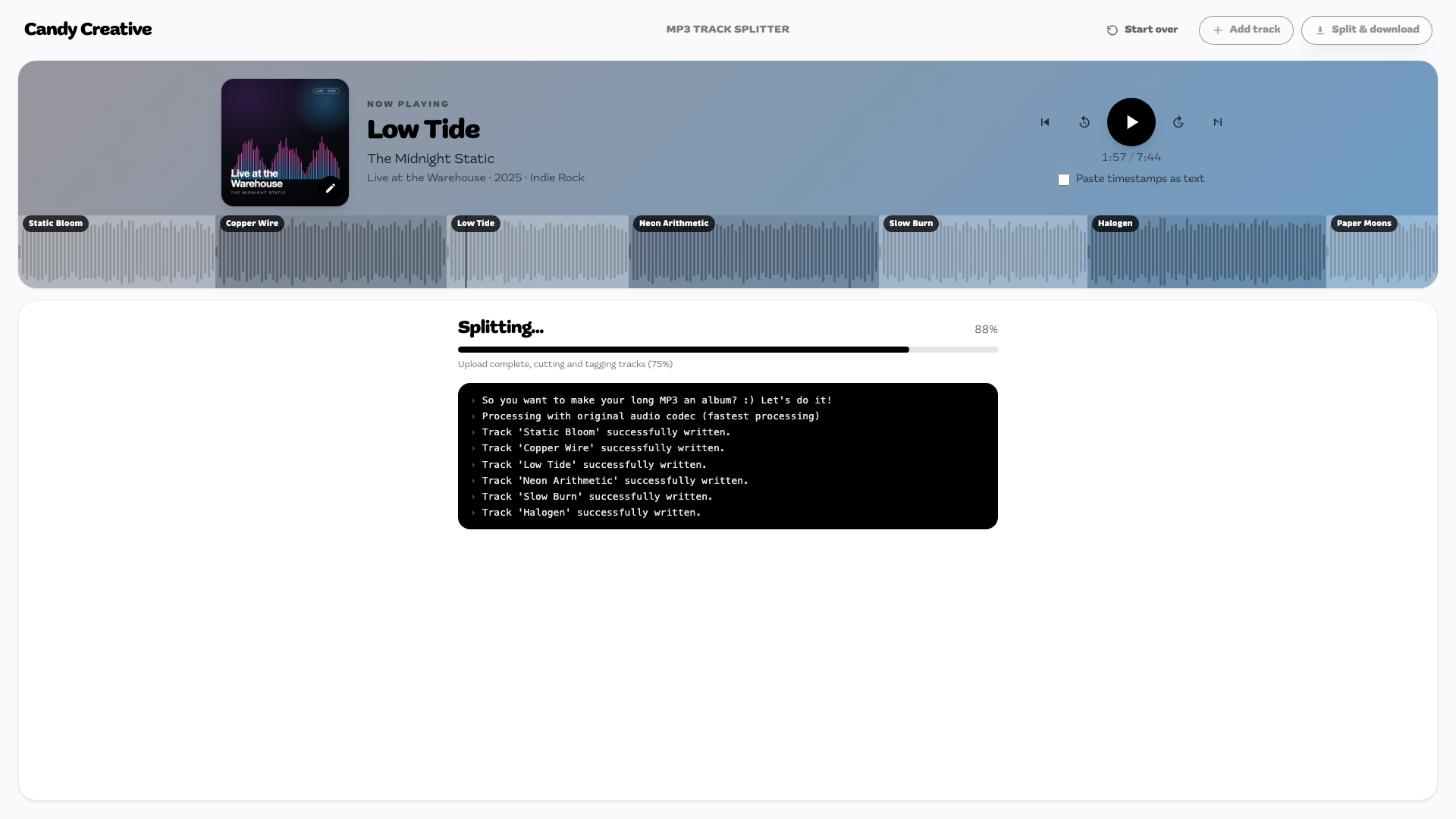
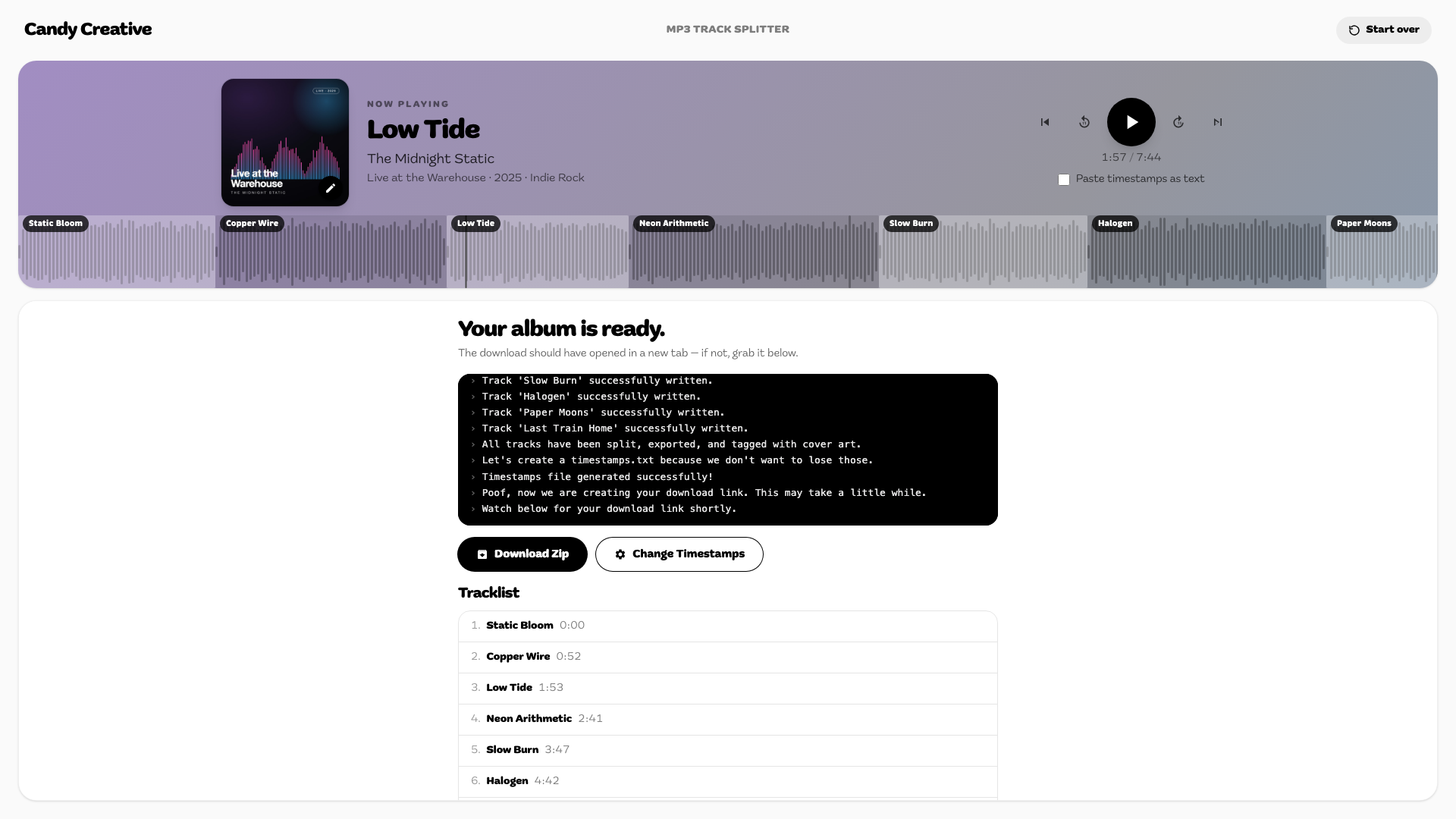
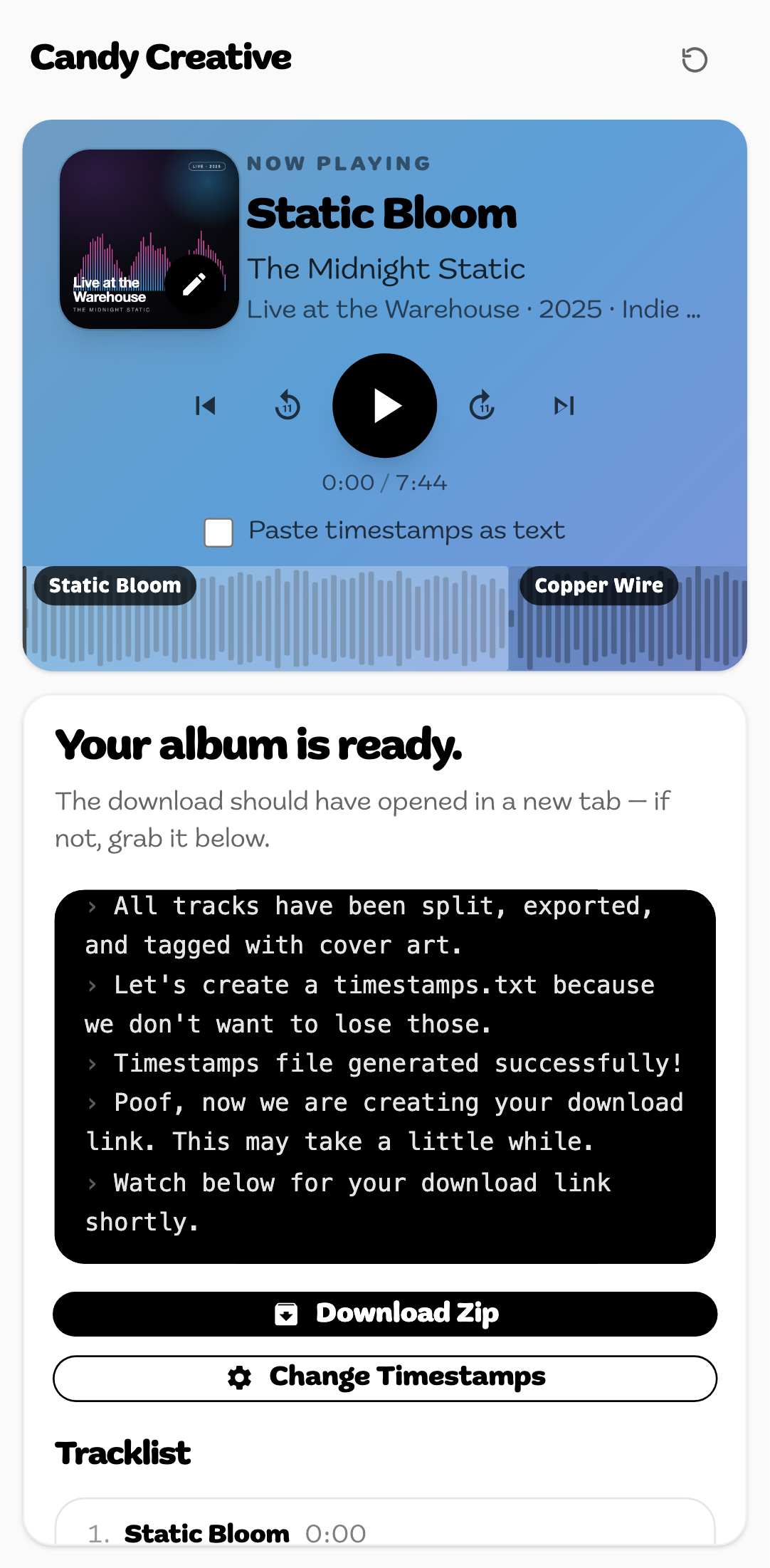
It shows its work. Cutting and tagging takes real time on the server, so instead of a spinner the page streams a live log of every cut, every tag and the zip being built. People trust what they can watch.
It respects your audio. By default tracks are cut without re-encoding, so nothing is lost. If you need smaller files, re-encoding to MP3, AAC or Opus is one dropdown away.
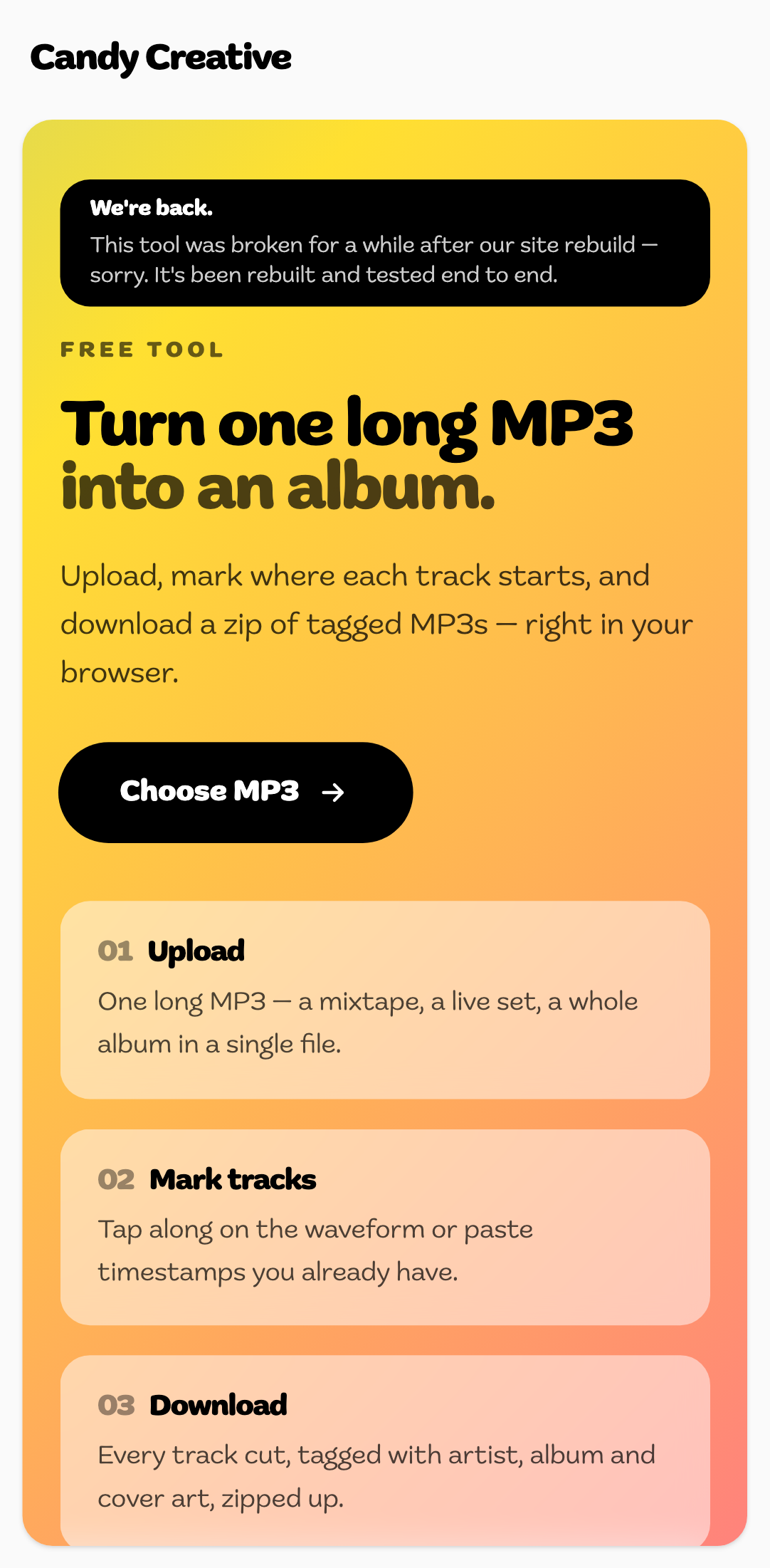
It's tested like a product, not a demo. An automated browser suite runs the real pipeline at desktop, laptop and phone sizes and checks the layout, the streaming log, the tags inside the output files and the download. The agent wrote that suite, and then used it to take the pictures below.
Under the hood it's Next.js with React and Redux, Node route handlers driving ffmpeg, files parked on Amazon S3, and reCAPTCHA so a free tool stays free. Nothing exotic. The interesting part is how much of it a well-directed AI can produce when the person directing it knows what good looks like.
That's what we sell. If you've got a product idea and want to see how far AI development can take it, talk to us. And if you've just got a long MP3, go split it.